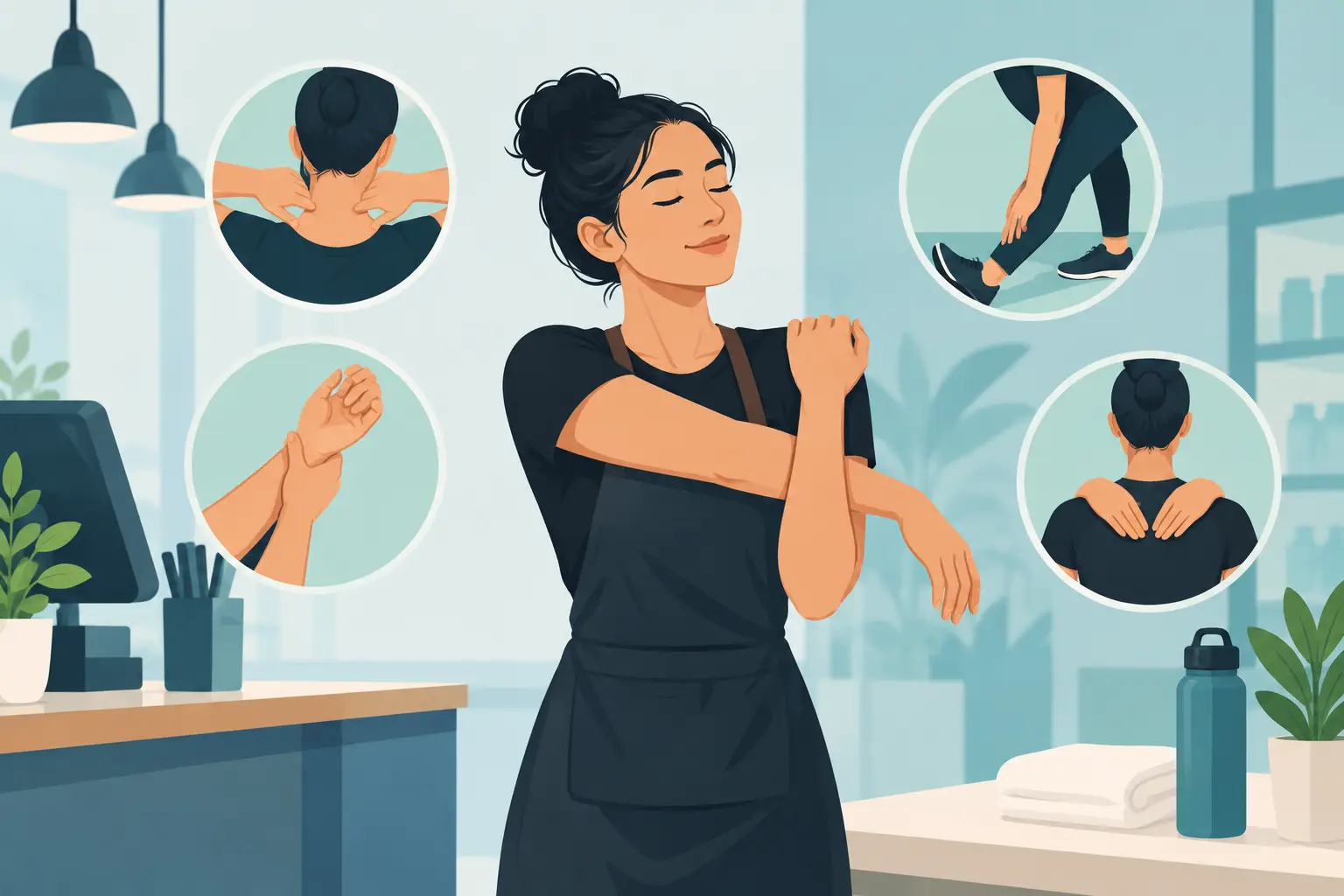
The last hour of a shift can feel like it lives in your feet, lower back, and shoulders. A thoughtful massage routine for service workers gives your body a dependable way to come down after long hours of standing, walking, lifting, reaching, and staying pleasant under pressure. It is not about treating self-care as a reward you have to earn. It is about making recovery part of the workweek.
Restaurant staff, retail associates, hairstylists, baristas, caregivers, hotel teams, warehouse workers, and front-desk professionals all carry stress differently. Some feel a pulling ache through the calves. Others notice stiff hands, a tight neck, or the heavy, restless feeling that makes it hard to sleep after closing time. Regular massage can create space for both physical relief and a quieter mind.
Why service work creates so much tension
Service work asks your body to stay ready. You may spend hours on hard floors, pivoting quickly, looking down at a register, carrying trays, leaning over a client, or holding your shoulders steady while handling a rush. Even when the movements seem ordinary, repeating them for a full shift can leave muscles feeling overworked.
There is also the emotional side of the job. Being attentive to customers, coworkers, schedules, and small emergencies can keep your nervous system switched on long after you clock out. That is why recovery is not only about sore muscles. A calming massage can support the transition from work mode to rest, which may make it easier to settle into your evening and sleep more deeply.
Massage is not a replacement for medical care when pain is sharp, persistent, caused by an injury, or accompanied by swelling, numbness, or weakness. But for everyday work-related tightness and fatigue, it can be a comforting part of a realistic wellness routine.
Build a massage routine around your actual schedule
The best routine is the one that feels possible during busy weeks. For many service workers, one professional massage every three to four weeks is a supportive starting point. If you are in a particularly demanding season, such as holiday retail, wedding season, or a stretch of double shifts, you may benefit from booking more often for a short period.
You do not have to wait until your body feels completely worn down. Booking before a demanding week can help you feel more prepared, while a session after several long shifts can help you release the buildup. The right timing depends on your hours, budget, sleep, and the kind of physical demands your job places on you.
For a simple rhythm, try pairing massage with a predictable point in your month. Some people book after their busiest workweek. Others choose a day off, when they have time to enjoy a slow return home instead of rushing straight into another responsibility. Consistency matters more than choosing the perfect day.
Choose the pressure that feels restorative
A firm but gentle Swedish massage is often a welcoming choice when you feel generally tired, stressed, and tight. It can encourage circulation, soften everyday tension, and give your mind a chance to rest in a quiet room with soft lighting and tranquil music. This is a good fit when you want to leave feeling calm, loose, and recharged rather than intensely worked over.
Deep tissue massage is extra firm and may be better when you have stubborn tightness in areas such as the upper back, shoulders, hips, calves, or lower back. If your job has you lifting, standing for extended periods, or repeating the same movements all day, deeper pressure can feel especially helpful. Still, more pressure is not automatically better. The goal is productive relief, not gritting your teeth through discomfort.
Tell your massage therapist what a normal shift looks like. Mention whether you wear supportive shoes, spend most of the day at a counter, lift boxes, work at a salon station, or drive between appointments. That context helps shape a session around the areas that work hardest for you.
A practical recovery plan between appointments
Professional massage works best when it is supported by small habits at home. You do not need a complicated routine or an hour of spare time. A few minutes after work can help you notice tension before it becomes the background noise of every day.
When you get home, sit down before moving into chores or scrolling on your phone. Take a moment to elevate your feet, remove tight shoes and socks, and drink some water. Use your hands or a tennis ball against the floor to apply gentle pressure to the soles of your feet. Move slowly, especially if your feet are tender. The goal is soothing pressure, not pain.
For calves, place your hands around the lower leg and use long, comfortable strokes upward toward the knee. A warm shower, heating pad, or warm compress can make this feel even more relaxing. If your shoulders hold the stress of customer interactions, gently rub the tops of the shoulders and the muscles beside the neck while taking slow breaths.
Try not to turn this into another task you can fail at. Even five quiet minutes can send a helpful message to your body: the shift is over, and it is safe to rest.
Make your massage day work for you
A little planning can help the benefits of a session last beyond the massage table. Wear comfortable clothes, arrive a few minutes early if you can, and give yourself permission not to rush. At Violet Massage, the goal is a soothing, approachable experience where your body can relax without the pressure of a luxury-spa performance.
Before the session begins, be direct about what you need. You can say that your feet are sore from standing, your forearms ache from repetitive work, or your lower back feels tight after lifting. You can also share if you prefer quiet, need lighter pressure in a sensitive area, or want extra attention on one part of the body.
Afterward, keep the rest of the day gentle when possible. Drink water, eat something nourishing, and avoid scheduling a demanding workout immediately afterward if your muscles feel tender. Some people feel energized after massage, while others feel sleepy and deeply relaxed. Both responses can be normal.
Add aromatherapy when stress is part of the soreness
Not every workday leaves a visible ache, but it can still leave you emotionally drained. Aromatherapy can be a lovely add-on when you want your massage to feel like a fuller reset for body and mind. The gentle scent, calm music, and warm atmosphere can help create a clear boundary between the pace of work and the pace of rest.
It is a small choice, but sensory comfort matters. When your days are full of noise, bright lights, and other people’s needs, a quieter hour can feel deeply restorative.
Listen for signs that your routine needs adjusting
If you are constantly sore despite regular recovery, look at the full picture. Shoe support, break patterns, hydration, sleep, workstation setup, and how much you are carrying can all affect how your body feels. A massage routine can support you, but it cannot erase an unsustainable workload or a poorly fitted pair of work shoes.
Pay attention to what changes after a few sessions. Maybe your calves feel lighter, you wake up less stiff, or you notice you are not carrying your shoulders up by your ears throughout a shift. Those small improvements are meaningful. They show you which kind of care helps your body keep doing the work that matters to you.
Your job may require you to show up for everyone else all day. Setting aside regular time to rest your feet, soften your shoulders, and quiet your mind is one gentle way to show up for yourself, too.
Leave a Reply