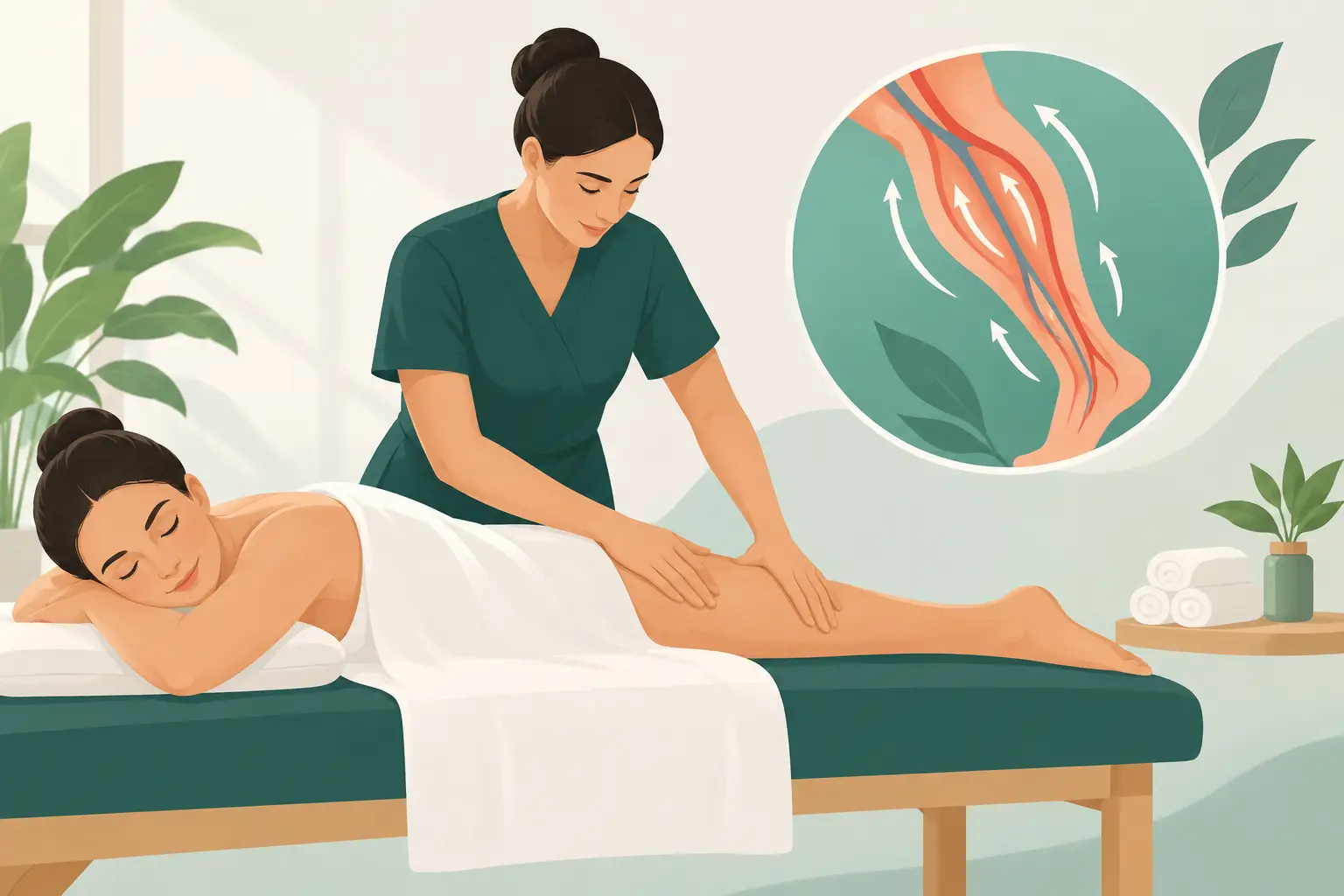
A long commute, hours at a desk, a demanding shift, or a stressful week can leave the body feeling heavy, tight, and worn down. Massage for circulation support offers a quiet, hands-on way to care for those feelings – not by promising a cure, but by helping you slow down, release muscle tension, and reconnect with how your body feels.
At its best, massage creates space for restoration. As steady pressure and flowing strokes warm the muscles, many people notice that stiff areas feel looser, their breathing becomes easier, and the stress they have been carrying begins to soften. That sense of ease is part of why a regular massage routine can feel so valuable.
What Circulation Support Means in Massage
Circulation is the ongoing movement of blood through the body, delivering oxygen and nutrients to tissues while carrying away metabolic byproducts. Your heart, blood vessels, activity level, hydration, and overall health all play a role. Massage is not a replacement for medical care or a treatment for circulatory disease. It can, however, be a supportive wellness practice for people who spend long periods sitting, standing, driving, or holding tension in the same muscles every day.
During a massage, gliding strokes and gentle compression can create warmth in the soft tissues. Research suggests massage may temporarily increase local blood flow in the treated area. More noticeably, it may help tight muscles relax. When your shoulders are no longer creeping toward your ears and your calves are not bracing after a long day on your feet, movement often feels more comfortable.
The benefit is not only physical. Stress can show up as shallow breathing, clenched hands, a tight jaw, and restless sleep. A calming massage session encourages the nervous system to shift out of constant alertness. That calmer state can support the kind of rest your body needs to recover from daily demands.
Massage for Circulation Support Starts With Comfort
There is no single massage pressure that works for everyone. The right approach depends on your comfort, your daily routine, and where you tend to carry tension. A massage should feel purposeful, not like something you have to endure.
Swedish massage for gentle restoration
Swedish massage is often a natural choice when you want a soothing, full-body reset. Its longer, flowing strokes and firm but gentle pressure can help warm the muscles while creating a deeply relaxing experience. It is especially well suited to clients who feel mentally overloaded, physically tired, or new to massage.
For someone who sits at a computer all day, Swedish massage may focus on easing the neck, shoulders, lower back, hips, and legs without leaving them feeling overly worked. For a parent or service worker who spends much of the day standing, it can be a welcome chance to let the feet, calves, and back rest.
Deep tissue massage for persistent tightness
Deep tissue massage uses extra-firm, slower pressure to address areas of more stubborn muscle tension. It can be a good fit when you regularly feel knots in the upper back, tightness through the hips, or soreness from repetitive work and exercise.
More pressure is not automatically better. Deep tissue work should be adjusted to your needs, and clear communication matters. If the pressure feels sharp, causes you to tense up, or leaves you holding your breath, it may be too much. The goal is to help the tissue relax, not to turn self-care into another source of stress.
Some people prefer Swedish massage most of the time and schedule deeper work only when a particular area needs extra attention. Others enjoy a blended session with relaxing strokes across the body and focused pressure on the areas that feel most restricted. Your body can guide the choice.
A Session That Supports Body and Mind
The setting matters as much as the technique. It is hard to settle into restorative care when you are rushed, cold, or waiting for the next notification to interrupt you. Soft lighting, tranquil music, a comfortable table, and a few uninterrupted moments give your body permission to let go.
Aromatherapy can add another layer to that experience. A calming scent may help you associate the session with rest and make it easier to slow your breathing. It is a simple add-on, but for many people, that sensory cue helps massage become a fuller mind-and-body ritual rather than just another appointment on the calendar.
At Violet Massage in Whittier, the intention is to offer that welcoming pause without making wellness feel complicated or out of reach. Whether you choose firm but gentle Swedish massage or extra-firm deep tissue work, the session can be shaped around the way your body feels that day.
Make the Benefits Last Beyond the Table
A massage can feel wonderful on its own, but everyday habits influence how your body feels between visits. You do not need a complicated wellness plan. Small, consistent choices can help you carry the relaxed feeling forward.
Try to drink water regularly, especially if your day is busy enough that you tend to forget. Take a few short walking breaks if you sit for long stretches, or change positions when you are on your feet for hours. Gentle ankle circles, shoulder rolls, and slow stretches can be useful when done comfortably rather than forced.
Sleep is another meaningful piece of the picture. When your muscles have time to rest and your mind has time to settle, you may be less likely to wake up feeling like you are already behind. A massage appointment can become part of an evening or weekend routine that says: this time is for recovery.
How often you schedule massage depends on your goals, budget, stress level, and how your body responds. Some clients enjoy a monthly reset. Others benefit from more frequent sessions during a particularly demanding season, then return to a less frequent rhythm once they feel more balanced. Consistency often matters more than chasing an ideal schedule.
When to Check With a Medical Professional First
Massage is generally a comfort-focused wellness service, but circulation concerns can sometimes need medical attention. If you have a diagnosed vascular condition, a history of blood clots, uncontrolled high blood pressure, heart disease, severe varicose veins, or diabetes-related circulation issues, speak with your health care provider before booking.
Skip massage and seek prompt medical care for sudden swelling, redness, warmth, pain, numbness, or color changes in an arm or leg. Chest pain, shortness of breath, fainting, or unexplained weakness also require urgent evaluation. These symptoms are not things to massage through.
It is also wise to mention pregnancy, recent surgery, injuries, medications that affect blood clotting, or any health change before your session begins. A thoughtful massage therapist can adjust pressure, positioning, and focus areas, or recommend waiting when massage is not appropriate.
Listen to the Kind of Relief You Need
The most useful massage is not always the deepest one or the longest one. Sometimes what your body needs is focused work on tight shoulders. Sometimes it is quiet, warmth, and an hour without having to solve anyone else’s problem. Both are valid forms of care.
If you leave a session feeling lighter, calmer, and more comfortable in your body, pay attention to that. Let it be a reminder that restoration does not have to wait for a vacation or a perfect week. A little regular care can make the everyday feel more manageable, one relaxed breath at a time.
Leave a Reply