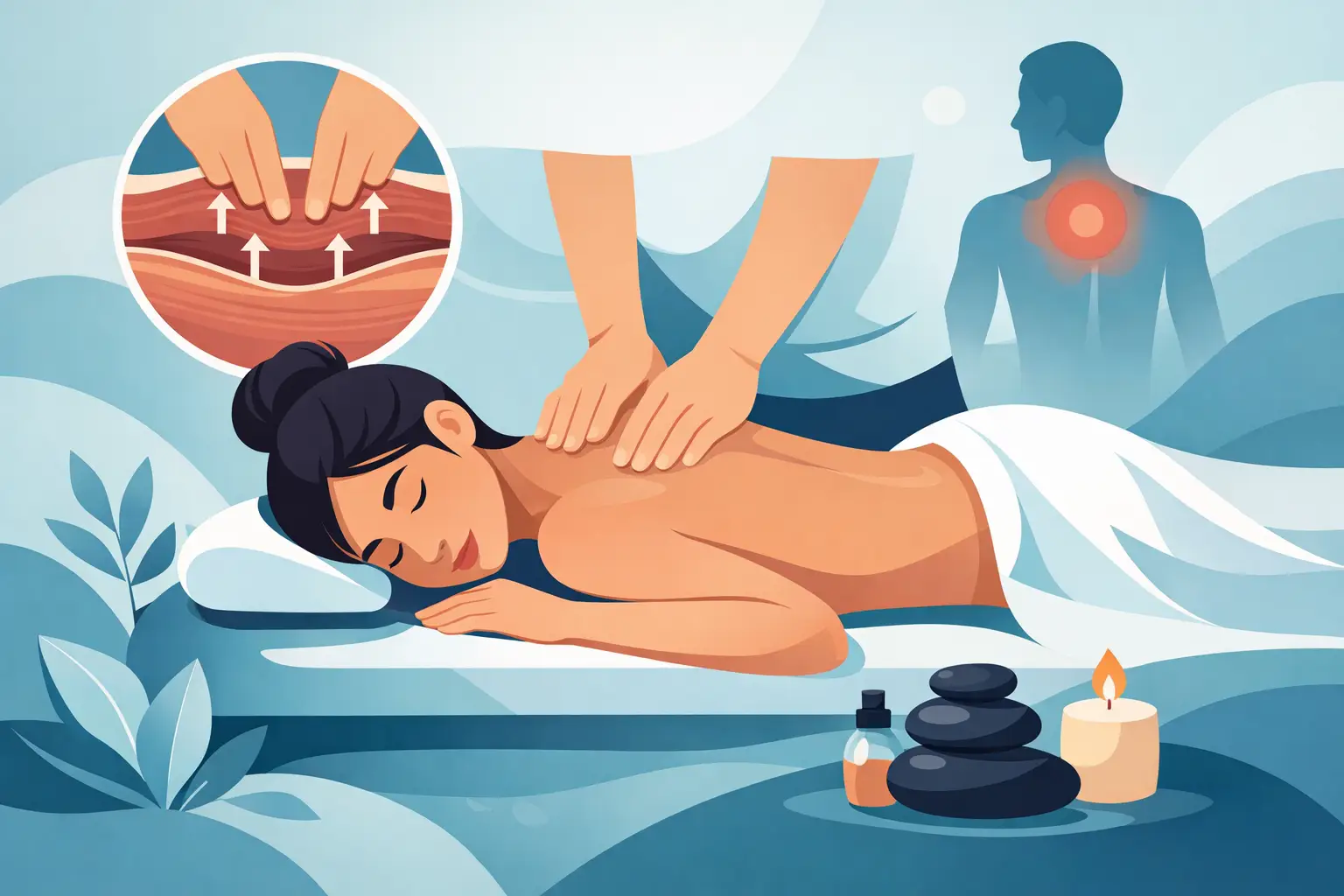
Some muscle tension fades after a hot shower or a good night of sleep. Other tension settles in deeper – across the shoulders, between the shoulder blades, through the low back, or down the hips and legs – and stays there. This deep tissue massage guide is for the kind of tightness that keeps coming back, especially when stress, long workdays, driving, parenting, or repetitive movement are part of daily life.
Deep tissue massage can be a very helpful choice when your body feels dense, overworked, and hard to fully relax. It is not about proving how much pressure you can handle. It is about using slower, firmer work to reach areas that may need more focused attention so your body can soften, move more easily, and finally exhale.
What deep tissue massage is really for
Deep tissue massage is designed for stubborn muscle tension and holding patterns that sit below the surface. If Swedish massage feels soothing but you still leave with a few areas that seem unchanged, deeper pressure may be the better fit. This style often uses slower strokes and sustained pressure to work through tight bands of muscle and connective tissue.
For many people, the appeal is simple. They want more than a relaxing hour. They want relief they can feel when they stand up, turn their neck, reach overhead, or get out of bed the next morning.
That said, deeper does not always mean better. A skilled session should feel purposeful, not punishing. Some tenderness can be normal, especially in areas that have been tight for a long time, but the goal is release, not overwhelm. Your body tends to respond best when pressure is strong enough to be effective and calm enough that you can still breathe through it.
Signs deep tissue massage may be a good fit
If your tension feels broad and stress-related, Swedish massage may be enough. If it feels specific, persistent, and resistant to lighter work, deep tissue often makes more sense.
You may benefit from deep tissue massage if you regularly deal with tight shoulders from desk work, neck tension from driving, low back stiffness, heavy legs, glute tightness, or soreness from physical jobs and repetitive movement. It can also be a good option if stress seems to land in the same places every week and you want more focused relief.
It also helps to think about your goals. If you want to drift off under soft lighting and tranquil music and simply reset your nervous system, lighter pressure may be the right call that day. If you want to leave feeling looser in one or two problem areas, deep tissue can be a more targeted choice. Sometimes the best session blends both – calming work overall with extra firm attention where you need it most.
Deep tissue massage guide: what to expect in a session
A good deep tissue session should feel clear and grounded from the start. You and your therapist will usually talk briefly about where you feel tension, how much pressure you prefer, and whether there are any areas to avoid. That conversation matters. Deep tissue is not one fixed level of force. It should be adjusted to your body, your comfort, and what is going on that day.
Once the session begins, the pressure often starts gradually. Your muscles usually respond better when they have a chance to warm up first. From there, the therapist may slow down over specific areas, using steady pressure and focused work rather than rushing across the body.
You may notice that some spots feel tender, especially around the upper back, shoulders, hips, or calves. That can be normal. What you should not feel is panic, sharp pain, or the need to brace your whole body just to get through it. If you find yourself holding your breath or tensing against the table, the pressure may be too much. Speaking up helps the session work better, not worse.
Many clients are surprised that deep tissue can still feel calming. In a quiet, cozy room with soft music and a peaceful atmosphere, firmer pressure does not have to feel clinical or harsh. It can feel like your body is finally being heard.
How deep is too deep?
This is where a lot of people get mixed signals. Some assume a massage only counts as deep tissue if it hurts. Others avoid it completely because they are worried it will be unbearable.
The truth sits somewhere in the middle. Effective deep work often brings a strong sensation, but there should still be a sense of relief inside it. A helpful way to think about it is this: discomfort that feels productive and manageable can be okay, while pain that makes you pull away, clench up, or dread the next pass is usually too much.
Your ideal pressure can also change from session to session. If you are well-rested, hydrated, and not especially stressed, you may tolerate more. If you are exhausted, sore, anxious, or close to your menstrual cycle, your body may want a gentler approach. Good bodywork respects that.
What you might feel after deep tissue massage
After a deep tissue session, many people feel lighter, looser, and pleasantly tired. Some feel immediate relief. Others notice the biggest difference later that evening or the next morning, when movement feels easier and the usual tight spots are less reactive.
It is also normal to feel a little sore for a day or so, similar to post-workout soreness. This is one reason aftercare matters. Drinking water, taking it easy, stretching gently, and giving your body time to settle can make a difference. A warm shower later in the day may feel especially good.
If you are new to deep tissue, it may help to avoid scheduling your first session right before a physically demanding day or a major event. Give yourself a little room to rest afterward if you can.
When Swedish massage may be the better choice
A practical deep tissue massage guide should also say this plainly: sometimes deep tissue is not the best fit, even if you usually like firm pressure.
If your body feels run-down, your stress is high, or your main goal is nervous system relief, Swedish massage may serve you better that day. Firm but gentle work can improve circulation, ease overall tension, and support better sleep without asking your body to process intense pressure.
This is not a lesser option. For many people, especially those carrying mental overload along with physical fatigue, a gentler massage creates the exact kind of reset they need. The right massage is the one that matches your body in the moment.
Getting better results from regular sessions
One deep tissue massage can absolutely help, but recurring tension often responds best to consistency. If your shoulders tighten every week from computer work or your low back flares from long commutes, waiting until you feel miserable usually means starting from behind each time.
Regular massage can help interrupt that cycle. Instead of chasing pain, you create more space in the body before the tension gets fully locked in. Over time, many people notice they recover faster from stress, sleep more deeply, and feel more connected to what their body needs.
That rhythm does not have to be complicated or extravagant. For working adults, busy parents, and anyone balancing long days with limited downtime, practical self-care works best when it feels approachable. A dependable local massage studio with clear service options, a soothing environment, and flexible payment choices can make it easier to stay consistent. For many clients in Whittier, that is part of what makes Violet Massage feel like a realistic part of wellness rather than an occasional splurge.
A few simple ways to prepare
You do not need a big routine before your appointment. Just arrive with enough time to settle in, avoid a heavy meal right beforehand, and think about the areas that have been bothering you most. If you know you want extra attention on your neck, shoulders, hips, or low back, say so.
It also helps to be honest about pressure. Many people stay quiet because they do not want to interrupt or seem difficult. In reality, clear feedback is part of a better massage. Your comfort helps shape the session.
If you enjoy sensory calm, aromatherapy can be a nice addition. The physical work matters, but so does the setting. Soft lighting, a quiet room, and a calming scent can help your mind let go while your muscles do the same.
The best deep tissue massage is not the one that leaves you flattened. It is the one that helps you walk out feeling more open, more grounded, and a little more at home in your body.
Leave a Reply